Individuals managing chronic gut issues like IBS, IBD, or leaky gut Those seeking ongoing wellness maintenance rather than immediate results Anyone looking for general inflammation control and systemic support Individuals who prefer a slow-release option to support daily function and recovery By targeting the intestines more directly, Delayed BPC-157 is particularly helpful for those with digestive sensitivity or those using the peptide for internal inflammation rather than muscular or skeletal pain
"That's been a longstanding challenge for FDA for many years," says Sklamberg, who added that when compounding pharmacies produce large quantities of a medication, quality control is more of a concern
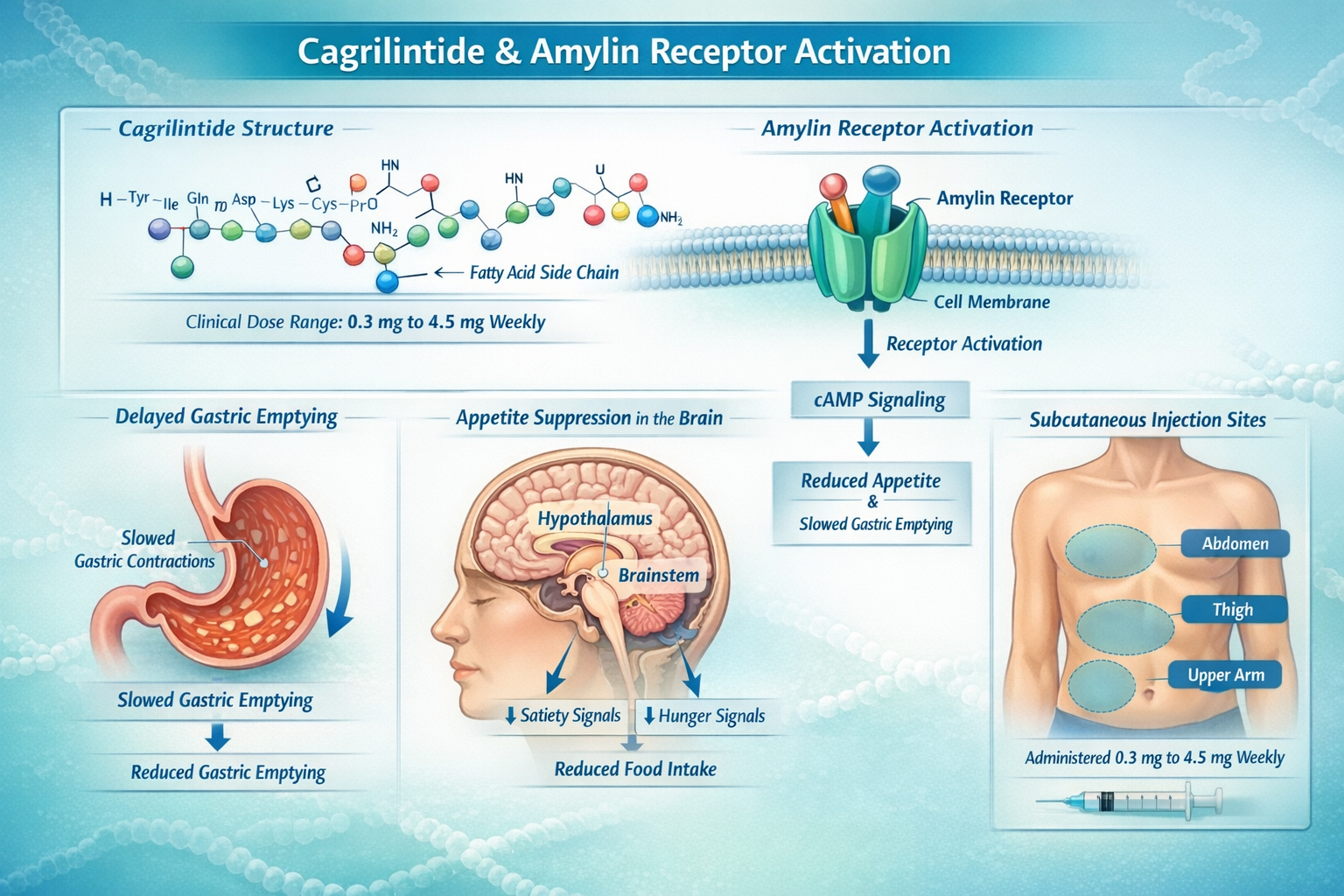
Metabolism & Elimination The metabolic fate of both components involves proteolytic degradation and renal clearance [19]: GLP3 contains DPP-4 resistant modifications (Aib2 residue) providing enzymatic stability Cagrilintide incorporates proline residues reducing fibril formation and improving stability Both peptides undergo gradual proteolytic cleavage to smaller peptide fragments Renal elimination represents the primary excretion pathway for metabolites No significant hepatic metabolism through cytochrome P450 pathways Steady-state concentrations are achieved after 4-5 weeks of once-weekly dosing for both components, with minimal accumulation beyond expected levels based on half-life calculations
Lewis et al., 2018)
Initially investigated for its potential to treat neurodegenerative diseases like Alzheimers and Parkinsons, this small synthetic peptide is known to bind with high affinity to hepatocyte growth factor (HGF) and its receptor c-Met, thereby promoting neuronal differentiation, dendritic branching, and synaptic plasticity